Letters Have No Arms have packed their bags, put their travel hats on, and moved to a new land!

You should be automatically redirected to the post you were looking for (yes, the same one!) in 5 seconds. If not, visit
http://www.lettershavenoarms.com
and please don't forget to update your bookmarks.

Showing posts with label literature. Show all posts

Thursday, December 24, 2009

Top 5 reads of 2009


1. "I Know This Much Is True" by Wally Lamb

Recommended for: people who like depressing books, people with an interest in mental illnesses or twins, people who like complex, daring, good books in general

I don't know what I can say about this book that will make you go and read it NOW. I wish you would just go and read it because I said so, but that's not how these things work. So I'll start by stating boldly that I haven't read anything this good in a very long time. Although I'm not sure it's the best way to go with this one, let me lay out the plot for you a bit. I Know This Much Is True is essentially the story of two brothers: Dominick - our protagonist and narrator - and Thomas, his schizophrenic identical twin. They do not know who their real father is and their stepfather is...well...let's just say he's not a role model. Their family history is a big mystery. And their lives are pretty much as f***ed up as they can get. Sounds like a big cliché? If only all books were such stunning and heartbreaking clichés. Like all amazing works of literature, I Know This Much Is True contains little glimpses of life scattered all over the place. Reading the words on every page feels a bit like sucking on your favorite lollipop - you just have to stop every now and then, the better to savour its taste. Me, I had to pause a bit after each paragraph. As soon as I started it I knew it would be one of those books - the ones you're sad to say goodbye to, the ones you want to keep reading forever. The storytelling is fantastic, nothing overdone, but nothing understated either. The plot is compelling and believable, the conclusion is realistic yet extremely touching, and the characters make you love them and hate them and be angry with them and fear for them and pity them – in short, they act like real people.  Not one person feels secondary in this book; everyone has a role, everyone has a story, there are no peripheral "flat" characters that are just there to fill a void. The book manages to discuss and explore religion, racism, identity, education, politics, war, parentage, jealousy, immigration, history, and pretty much everything in between. Also, bonus points go to the writer for the effort he has put into researching the issues that the book explores: Lamb has evidently done his homework on schizophrenia, on twin brothers, on the Italian immigration to America, on psychoanalysis, on the history and geography of the area where he places his characters and weaves his story. Like many reviewers of this book have done before me, I urge you not to be put off by its size. Believe me, as soon as you start reading it, you will want it to be long. There are about 5 novels that can brag about having made me cry. This is one of them. Only one warning: this is not a jolly holiday read. You have to be there. You have to invest in it. You have to be in the mood.

Opening sentence: "On the afternoon of October 12, 1990, my twin brother Thomas entered the Three Rivers, Connecticut Public Library, retreated to one of the rear study carrels, and prayed to God the sacrifice he was about to commit would be deemed acceptable."


2.       “The Last Samurai’ by Helen DeWitt (really this is number 1 as well)

Recommended for: fellow whizkid-lovers!, fans of the Glass family, people interested in foreign languages, education, and child-rearing, people who like bildungsromans, smartasses.

I have mentioned my obsession with whizkids many times before, although now that I think of it, it was never on this blog. So then you won’t mind if I repeat myself. Here goes. I LOVE WHIZKIDS. There is possibly no subject matter in the world I find more fascinating. If you happen to mention in passing a movie that has a child prodigy protagonist in it, or a child prodigy secondary character, or possibly even a child prodigy chimney sweeper that only appears for five seconds during the entire movie, chances are I’m gonna watch it. This all started years ago with Salinger’s Glass family, my favourite favourite favourite fictional characters which no one has yet – and probably never will - manage to dethrone. There were many whizkids I fell in love with after that. Stanley Spector from Magnolia, Klaus and Violet from the Series of Unfortunate Events, Dexter from Dexter’s Laboratory, Brain (Pinky & the Brain – although not exactly a “child”), Hermione Granger, Velma, Teddy and Esme and more recently (recently for me) Joshua Waitzkin from Searching for Bobby Fischer. Like I said none of these will probably be able to dethrone Seymour and Zooey Glass from their no.1 spot. But Ludo, age seven, child prodigy and the protagonist of The Last Samurai sure comes in a close second. I loved this boy with all my heart. And though usually when people say they love a kid they only mean it in a “aww he’s so cute” way, I mean it in a “aww he’s so cute and smart and interesting and brilliant and damaged and fantabulous and loveable and heartbreaking and great and can-I-please-please-please-order-one-just-like-him-somewhere?”

I want to make one thing clear in case you were wondering: the title coincides with the title of a known Hollywood movie with Tom Cruise in it. Like I said, coincides. Totally accidental. The book in fact takes its title from another movie: Kurosawa’s Seven Samurai. The relationship between Seven Samurai and this book is not so straightforward as the back cover would have you believe. Yes, it’s true that Sibylla, Ludo’s mother is worried about her son growing up without a role model since his father is ignorant about his existence, so she decides to play the movie every day for him in order to give him not one but 8 male role models: the seven samurai and Kurosawa himself! But the truth is that the relationship between book and movie is much more complex than that. There are beliefs and ideologies embedded in the movie that have become part of who Ludo is. There are life lessons to be had from it. There are languages to be learned. There are words of wisdom to be memorized and repeated. There are fictional characters that become real friends.  The complexities of the parallel that DeWitt is trying to draw between the two is mostly up to the reader to figure out. I don’t want to say anything more because the book is not so much about the plot. Suffice to say, The Last Samurai ties with I Know This Much Is True for my number one spot this year. Go read it.


3. “The Left Hand of Darkness” by Ursula K. Le Guin

Recommended for: sci-fi fans, people interested in gender roles and sexuality, people with a passion for folklore and legends, people who like a good alien-human friendship story (see: E.T., District 9 - but 10x more complex than either), people interested in ethnography and sociology

"Our entire pattern of socio-sexual interaction is non-existent here.(...) There is no division of humanity into strong and weak halves, protected/protective. One is respected and judged only as a human being. You cannot cast a Gethenian into the role of Man or Woman, while adopting towards "him" a corresponding role dependent on your expectations of the interactions between persons of the same or opposite sex. It is an appalling experience for a Terran..."

Genry is sent to the planet called Gethen as an envoy, his mission being to further the cause of the Ekumen - an alliance of various planets, including Earth, that would like to count Gethen amongst its members. He is sent there alone so as to prevent Gethenians from seeing him as a threat, and so he can explain to them the benefits they would experience if they were to be part of the Union: benefits economic, scientific, medicinal, political and, of course, cultural. His mission, however, is complicated by many factors. For one thing, Genry is considered a "pervert" because he is not androgynous and because his sexual potency is not limited to a few days per month - he is in constant "kemmer". For another, while his reproductive system is considered abnormal, such cases have been known to exist on Gethen and so many do not believe that he comes from another planet, having never seen an "alien" before. In fact, no birds or any sort of winged animals exist on Gethen and therefore, not only do they not believe it is possible to build spaceships, but they think it impossible to fly at all. "How could it ever occur to a sane man that he could fly?", asks one Gethenian. Further complications arise when political considerations get in the way of the mission; when leaders that are suppose to care for the general good of all mankind, are too blinded by personal interests and territorial disputes to see the bigger picture.

Because of the ambiguous sexuality of the Gethenians, who are potentially both Man and Woman, the novel is often seen as a study on gender and sexuality. It is true that by using an alienating device (no pun intended) to great effect, Le Guin makes us reconsider gender roles. She manages to explore the way in which such a trivial factor as sex can determine our entire roles in society and shape out behaviour patterns that we follow through life. But The Left Hand of Darkness amounts to so much more than gender study. There are so many layers of meaning! Le Guin creates a whole world filled with the myths, legends, religions, popular beliefs and traditions of a rich and complex society. Many of these are interspersed throughout the book not necessarily to advance the story but, it seems, for the single purpose of enriching our experience. The ideologies and unspoken rules of behaviour that surface through the Gethenians' speech and through their actions make it possible for us to see their true nature. We recognize that the inhabitants of this cold planet (nicknamed "Winter" by Earthlings) are so very different, yet at the same time so similar to us; that they are unmistakably human. Le Guin does not only teach us about gender, but also about friendship and trust, about politics, about tradition, about respect, about patriotism and about bigotry, about lies and truth, about ambiguity, about the acceptance of the Other, whether that Other is of a different gender, or of a different colour; whether that Other is merely an inhabitant of a different country, or whether he is a strange black alien who is considered a pervert because he "must carry always his sexual organ outside himself" .


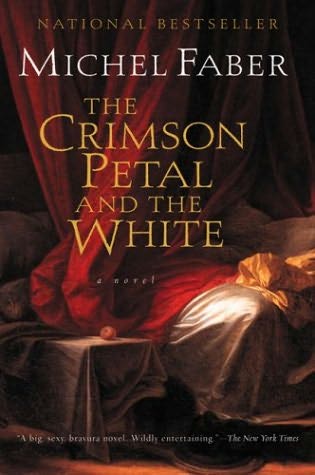
4. “The Crimson Petal and the White” by Michel Faber

Recommended for: Victorian period fans, people who like London, people who think they would like a story about a prostitute called Sugar and her attempts to climb up the social ladder, people who don’t get “offended” easily, people who like big books

The Crimson Petal and the White is a book that knows precisely where it stands - and where it stands is at the utmost edge between Victorian and postmodern. Its themes, its conflicts, its setting, its people, and the motivation behind their actions and thoughts are utterly Victorian. All the concerns of the era, from the Woman Question to the technological advancements and the loss of the "natural", from the "evil of prostitution" to the inhuman working conditions, from the religious dilemmas of the time to the conflict between "tradition" and "modernity" - everything and anything that might concern the Victorian man or woman is addressed here. Issues of poverty, hunger, dirt, and criminality are dealt with so perceptively and touchingly that it would flummox even Dickens. The hypocrisy of the upper classes and their preoccupation with nothing more than balls, parties and "social calls" are ridiculed with a wit and sharpness worthy of Austen. But if you glance at the novel's form and writing, the daring pen of Michel Faber makes it clear that The Crimson Petal and the White, despite the title's allusion to a famous Victorian poem, does not belong to the 19th century. Faber, the writer, often steps into the story - to great comical effect - to offer the readers advice or to stir the story into another direction. He makes his authorial presence known and, in true postmodern fashion and in the spirit of Lemony Snicket, often addresses the reader directly: "So there you have it: the thoughts (somewhat pruned of repetition) of William Rackam as he sits on his bench in St. James's Park. If you are bored beyond endurance, I can offer only my promise that there will be fucking in the very near future, not to mention madness, abduction, and violent death." It seems that he uses every device and trick known to writers to keep the reader interested in the story, but makes the whole thing seem so effortless - he never lost me for one second. Most importantly, the distance between mr. Faber's era and the era he is describing makes it easier for him to see the past in a clearer light, and allows him to express his observations and his critique openly. "This is the novel that Dickens might have written had he been allowed to speak freely", The Guardian says, and they're definitely onto something here. It was a comfort to see a writer that finally has the courage to address that most mystifying feature of the Victorians - one that jumps out at me whenever I pick up mr. Dickens - the fact that sex is an unmentionable topic with them. Of course, the conflict between the Victorians' behaviour and their "morals" is transparent: while prostitution is soaring and people are certainly no less interested in sex than today, they insist on acting as though sex is simply inexistent, far way from their thoughts and lives. The effects of this sexual repression on society's part are made clear enough in the novel: people battling with their consciences, trying to reconcile the idea of sex as something that is clearly natural and desirable in their hearts of hearts with the idea of sex as filthy, degrading and evil.

The only reason why I didn't award it a full five stars is a certain death that I thought was completely unnecessary - it seemed to me that it was just an easy way to dispose of a character that served a purpose no longer. Other than that, this is a wonderful book. Sugar - our prostitute heroine - along with William Rackam, Henry Rackam, Emmeline Fox, Agnes, Sophie, Caroline, Colonel Leek, Clara, Ms. Castaway will draw you in and never let you go. Great cast, great story, great writing, great book.


5.  “The Book of Daniel” by E.L. Doctorow

Recommended for: history buffs, people interested in American politics, people who like historical metafiction, people who find random trivia fascinating, people who love stumbling upon an unusual authorial voice, people who like the 60s

I can tell just how much I love an author's writing mostly the days after I've finished reading one of his books. When I start writing an e-mail to a friend and after a couple of sentences think"wait a minute, this is not my style, where did I get this from?". When an author is that good, his way of using punctuation or syntax, his unusual metaphors or sentences or a certain attitude and tone behind the words inevitably work their way into your own writing style. Doctorow is that kind of author. His voice stuck inside your head for days and days. Using language and writing in a way that constantly undermines the reliability o language and writing. "The early morning traffic was wondering - I mean the early morning traffic was light, but not many drivers could pass them without wondering who they were and they were going" Or if you prefer: "In any event, my mother and father, standing in for them, went to their deaths for crimes they did not commit. Or maybe they did commit them. Or maybe my mother and father got away with false passports for crimes they didn’t committ. How do you spell comit?" And if you think all this is postmodern mumble-jumble and where's the plot, the story? The story, I will let you know, is wonderful. Wonderful and sad and infuriating and thought-provoking and suspenseful and everything you could wish for. This is the story of the execution of Ethel and Julius Rosenberg (renamed in the book Paul & Rochelle Isaacson) seen from the point of view of their son - Daniel in the book. Our protagonist. Trying to make sense of something that could not and should not make sense for any person calling himself/herself a human being. I could go on but I find that all I want to do is not describe the book (which would be doing it an injustice) but quote passages from it. So I'll just say for me this is a must-read. And stop there.

"The difference between Socrates and Jesus is that no one has ever been put to death in Socrates’ name. And that is because Socrates’ ideas were never made law."

Disclaimer: this post is about books I happened to read this year, not books that were published in 2009.

Lately we've been listening to:
Dave Rawlings Machine - Sweet Tooth
Elvis Perkins - Doomsday

Thursday, November 19, 2009

In a boy-meets-girl story the boy should always meet the girl.

When candles light themselves and the air turns creamy
Why not take a photograph?
You look so dreamy
Then stand in the blackness, smile at the tinkling

Blinded by lovedust; what did I see?


A million, a billion, a trillion stars.


Otouto - Sushi
Luna - Lovedust
Back in Judy's Shack - The Puff, The Drag, The Whiff
*

"EVERY day Justin Horgenschlag, thirty-dollar-a-week printer’s assistant, saw at close quarters approximately sixty women whom he had never seen before. Thus in the few years he had lived in New York, Horgenschlag had seen at close quarters about 75,120 different women. Of these 75,120 women, roughly 25,000 were under thirty years of age and over fifteen years of age. Of the 25,000 only 5,000 weighed between one hundred five and one hundred twenty-five pounds. Of these 5,000 only 1,000 were not ugly. Only 500 were reasonably attractive; only 100 of these were quite attractive; only 25 could have inspired a long, slow whistle. And with only 1 did Horgenschlag fall in love at first sight.

Now, there are two kinds of femme fatale. There is the femme fatale who is a femme fatale in every sense of the word, and there is the femme fatale who is not a femme fatale in every sense of the word.

Her name was Shirley Lester. She was twenty years old (eleven years younger than Horgenschlag), was five-foot-four (bringing her head to the level of Horgenschlag’s eyes), weighed 117 pounds (light as a feather to carry). Shirley was a stenographer, lived with and supported her mother, Agnes Lester, an old Nelson Eddy fan. In reference to Shirley’s looks people often put it this way: “Shirley’s as pretty as a picture.”

And in the Third Avenue bus early one morning, Horgenschlag stood over Shirley Lester, and was a dead duck. All because Shirley’s mouth was open in a peculiar way. Shirley was reading a cosmetic advertisement in the wall panel of the bus; and when Shirley read, Shirley relaxed slightly at the jaw. And in that short moment while Shirley’s mouth was open, lips were parted, Shirley was probably the most fatal one in all Manhattan. Horgenschlag saw in her a positive cure-all for a gigantic monster of loneliness which had been stalking around his heart since he had come to New York. Oh, the agony of it! The agony of standing over Shirley Lester and not being able to bend down and kiss Shirley’s parted lips. The inexpressible agony of it!

* * *

That was the beginning of the story I started to write for Collier’s. I was going to write a lovely tender boy-meets-girl story. What could be finer, I thought. The world needs boy-meets-girl stories. But to write one, unfortunately, the writer must go about the business of having the boy meet the girl. I couldn’t do it with this one. Not and have it make sense. I couldn’t get Horgenschlag and Shirley together properly. And here are the reasons:

Certainly it was impossible for Horgenschlag to bend over and say in all sincerity:

“I beg your pardon. I love you very much. I’m nuts about you. I know it. I could love you all my life. I’m a printer’s assistant and I make thirty dollars a week. Gosh, how I love you. Are you busy tonight?”

This Horgenschlag may be a goof, but not that big a goof. He may have been born yesterday, but not today. You can’t expect Collier’s readers to swallow that kind of bilge. A nickel’s a nickel, after all." (...read the rest of the story here)

excerpt from "The Heart of a Broken Story", J.D. Salinger

Wednesday, November 4, 2009

Words


Please tell me you're one of those people who love looking up words in dictionaries. Good. Thanks for that. I like to imagine that all our readers are the kind of people who love looking up words in dictionaries. And because of that, none of you will find this post in the least boring. Ideally you'll spend the next hour figuring out a way to casually use floccinaucinihilipilification in a conversation. I know it's hard but believe me: when the moment comes it will be rewarding. Yes, this post will probably go down as a rant and if it must then it better go down as an awesome rant because it's a rant about one of LHNA's favourite things in the world after good music and popcorn-flavoured jellybeans: words. Old words. New words. Mostly new words. Invented words. Words we love because they sound funny and words we love because they sound smart and pretentious. Words that look good on paper but you never know how to pronounce them. Words that are not included in dictionaries but should be because they are the definition of awesomeness - kind of like "awesomeness" itself. Or Magnetic Fields' by now fabled "unboyfriendable". But let's pause. I must explain first.

English is not my native language. It's not even my second language. Which means that most of my knowledge of it was acquired through a) reading, b) listening to song lyrics and c) paying attention to my amazing English teacher once in a while. Which also means that since the language acquisition didn't happen naturally (as with children picking up their mother tongue) it followed a weird path: I knew what "stigmatize" and "atrophy" meant before I knew what "hammer" or "smog" did. ("smog? smoke and fog? seriously???") Thus once in a while I get to experience the joy of finally stumbling upon one of those basic words that everyone knows yet it somehow managed to avoid crossing my path. I remember how ecstatic I was, one rainy evening maybe a year or so ago, when Steven explained that there was actually a handy word for my usual "a little bit of rain": drizzle. Drizzle! Oh happy happy word! On the other hand, around the same time I also remember the glory of discovering the amazing "estivate", a word that gets even more magnificence points for having the latin-reminiscent alternative spelling "aestivate" - SO much better than the word hibernate! I could go on and on and on, but now that I've explained how happy new words make me let me get to the musical part of this post. Here it is, my pearl of wisdom for today: song lyrics = words in a foreign language you will never forget. That's right, I'm indeed suggesting that instead of paying a lot of money on all those language-learning CDs and private schools you should just listen to some bands you love and look up all the words you don't know in a dictionary. Do the same with books and you're set. You'll never need another foreign language lesson in your life. Mind you, for this to work, you can't listen to "Umbrella" all day (although the use of "hydroplane" as a verb coupled with "entity" in one of the most popular songs of 2008 is not nothing). Thank goodness there are some great, witty, eloquent lyricists out there that can really help. If you haven't decided on the language choose something like Swedish or Spanish: you'll have even more of an advantage because of the sheer amount of great bands coming from those countries. And yes, many of them sing in their own languages! I can certify that there is no better feeling in the world than when a song you love forces you to look up a word - a word which you will forever remember because you will associate it with said song. So this post is dedicated to some of the bands that taught me new words, helped me better understand words I already knew, and made opening dictionaries fun.


These next words I discovered through songs, most of them a long time ago. I remember them because I cannot use any of these words without the correspondent song lyrics popping into my head every time:

chaparral = an area of dry land that is covered with small bushes
I first found it in: "There's rattlers in this roundabout, they come in from the chaparral" (Diane Cluck - The Turnaround Road)

penchant = a special liking for sth syn fondness
first found it in: "Where did you get that penchant for destruction in the way you talk?" (Destroyer - Painter in Your Pocket)

bolster = to improve sth or make it stronger: to bolster sb’s confidence / courage / morale
first found it in: "We've got the American Jesus bolstering national faith" (Bad Religion - American Jesus)

vicissitude = (formal) one of the many changes and problems in a situation or in your life, that you have to deal with
first found in: "Vicissitudes are boxing our head" (Of Montreal: Suffer for Fashion)

thaw = (of ice and snow) to turn back into water after being frozen syn melt
first found in: "My heart has thawed and continues to beat" (Bright Eyes: June on the West Coast)

refectory = a large room in which meals are served, especially in a religious institution and in some schools and colleges in Britain
first found in: "Find me and follow me though corridors, refectories" (Franz Ferdinand - The Dark of the Matinee)

baneful = (literary) evil or causing evil
first found in: "I've been dreaming of a time when to be English is not to be baneful" (Morrissey - Irish Blood, English Heart)

perforate = to make a hole or holes through sth
first found in: "I was standing on the surface of a perforated sphere" (Death Cab for Cutie - Transatlanticism)

debonair = (old-fashioned) usually of men: fashionable and confident, having a sophisticated charm
first found it in: "You had a charming air, all cheap and debonair" (The Decemberists - The Old Mariner's Revenge Song)


(Parenthesis. There are so many words I first became acquainted with through Colin Meloy's lyrics: debonair, roustabout, wanton, pinion, picaresque, kith, gadabout, sinews, indolent, the list goes on and on. So to honour them I will utter a little prayer to the almighty Decemberists: "Thank you, oh omnipotent Gods, for paying attention in school and reading books and watching movies and being cool and doing whatever it is that you do that allows you to make such an amazing use of vocabulary in your songs. May you forever be with us to guide us through the literacy crisis and protect us from the evil Killers and the Shakiras of this world and their murdering of the English language. Amen.")


Fantabulous site for the day:


Favorite words at the moment:
fantabulous
eleemosynary
facsimile
slosh
adjacent
indelible
assuage
woolgathering
+
floccinaucinihilipilification (you have to laugh at the undisguised pretentiousness of that word)

Friday, October 23, 2009

Winter storytelling


The BBC National Short Story Award is apparently "the largest award for a single short story in the world." The largest in prize-money because in terms of fame I can't say I even heard of it before I chanced upon their website the other day. Now book prizes have been known to succeed in emptying your pockets faster than you can say "manbookerprize", but I was surprised to see that the BBC NSSA website is offering - for free - not only all the winning stories from the previous years for your reading pleasure (which, granted, aren't that many since the award was inaugurated in 2006), but also all the competing short stories from those years. The great thing is you can download them all as Word documents (or pdfs) and decide for yourself whether the stories deserved to win or not, whether there was a better short story out there that was neglected. I found the 2008 winner, Clare Wigfalls' "Numbers" fully deserving of the prize - the short story had an almost Alice Munro'-esque power of creating atmosphere. The chairwoman of the judges' panel commented that "Clare’s evocation of superstition and frustrated lives on a remote Scottish island is an act of historical ventriloquism. She shows just what the short story can achieve, conjuring up a whole world through a microcosm." Read the story for yourself here, or find out more about the award here. (to get to the stories you will have to click on the individual pages for each year e.g. "Find out more about the 2007 Award")

This year the shortlisted books will be announced on Friday, the 27th of November and even better, they will be broadcast on BBC Radio 4 every day from the 30th November until the 4th December. What better way to spend those forthcoming cold winter afternoons?


Some songs for our musically-starved readers

Band of the week at LHNA: The Pines (the UK ones; there are 3 bands with the same name!)
Download: "Please Don't Get Married (Without Asking Me)"
                "Darling, Don't You Think?"
                "A Rainy Day"

Illustration: Valérie Parizeault

Wednesday, May 13, 2009

A Book & a Band

I usually keep my book reviews separate from my song reviews. I use Librarything for the former and Letters Have No Arms for the latter. But I figured it's wort breaking this rule from time to time - perhaps only in favour of 5-star books (ok, I rated it 4.5 actually, not 5, but you get the point). If even one person will be inspired to go out and buy it, I'll be happy. And now my review, copy-pasted from LT:

"The Crimson Petal and the White is a book that knows precisely where it stands - and where it stands is at the utmost edge between Victorian and postmodern. Its themes, its conflicts, its setting, its people, and the motivation behind their actions and thoughts are utterly Victorian. All the concerns of the era, from the Woman Question to the technological advancements and the loss of the "natural", from the "evil of prostitution" to the inhuman working conditions, from the religious dilemmas of the time to the conflict between "tradition" and "modernity" - everything and anything that might concern the Victorian man or woman is addressed here. Issues of poverty, hunger, dirt, and criminality are dealt with so perceptively and touchingly that it would flummox even Dickens. The hypocrisy of the upper classes and their preoccupation with nothing more than balls, parties and "social calls" are ridiculed with a wit and sharpness worthy of Austen.

But if you glance at the novel's form and writing, the daring pen of Michel Faber makes it clear that The Crimson Petal and the White, despite the title's allusion to a famous Victorian poem, does not belong to the 19th century. Faber, the writer, often steps into the story - to great comical effect - to offer the readers advice or to stir the story into another direction. He makes his authorial presence known and, in true postmodern fashion and in the spirit of Lemony Snicket, often addresses the reader directly: "So there you have it: the thoughts (somewhat pruned of repetition) of William Rackam as he sits on his bench in St. James's Park. If you are bored beyond endurance, I can offer only my promise that there will be fucking in the very near future, not to mention madness, abduction, and violent death." It seems that he uses every device and trick known to writers to keep the reader interested in the story, but makes the whole thing seem so effortless - he never lost me for one second. Most importantly, the distance between mr. Faber's era and the era he is describing makes it easier for him to see the past in a clearer light, and allows him to express his observations and his critique openly. "This is the novel that Dickens might have written had he been allowed to speak freely", The Guardian says, and they're definitely onto something here. It was a comfort to see a writer that finally has the courage to address that most mystifying feature of the Victorians - one that jumps out at me whenever I pick up mr. Dickens - the fact that sex is an unmentionable topic with them. Of course, the conflict between the Victorians' behaviour and their "morals" is transparent: while prostitution is soaring and people are certainly no less interested in sex than today, they insist on acting as though sex is simply inexistent, far way from their thoughts and lives. The effects of this sexual repression on society's part are made clear enough in the novel: people battling with their consciences, trying to reconcile the idea of sex as something that is clearly natural and desirable in their hearts of hearts with the idea of sex as filthy, degrading and evil.

I could go on and on but I think I've described the book well enough to stop here. The reason why I didn't award it a full five stars is a certain death that I thought was completely unnecessary - it seemed to me that it was just an easy way to dispose of a character that served a purpose no longer. Other than that, this is a wonderful book. Sugar - our prostitute heroine - along with William Rackam, Henry Rackam, Emmeline Fox, Agnes, Sophie, Caroline, Colonel Leek, Clara, Ms. Castaway will draw you in and never let you go. Great cast, great story, great writing, great book."


Boat Beam hail from Spain( but sing in English) and have just released their new first album on Origami Records. It's indie pop delightfulness.

Boam Beam - The Rain Pauly

Wednesday, January 21, 2009

LHNA News

*
For those of you who like to read, you should know that Letters Have No Arms has joined Bookmooch. This is our profile, take a look at our inventory and see if there's anything you might want. We're giving away Great Expectations, The Little Friend, Women in Love, Jane Eyre and A Boy's Own Story, among others. Oh, and a lovely abridged edition of Of Mice and Men for children! And if you have time, take a look at our wishlist, see if you can make our day by sending us something on there :P For those of you not familiar with Bookmooch, it's a great site for swapping books and it's brilliant so you should be familiar with it.

Also, make sure to pass by Librarything and check out my 50 book challenge for 2009! Readers or non-readers, I think you might enjoy it. See you there!

Thursday, October 9, 2008

Songs about books: a mix tape

Our favorite songs about books everyone.

1. Akron/Family - Franny/You're Human

"Please Lord give me strength to be nobody
'cause I am not my thoughts'
("Franny and Zooey" by J. D. Salinger
)


2. Modest Mouse - Bukowski
"Woke this morning and it seemed to me
That every night turns out to be a little bit more like Bukowski
And yeah, I know he's a pretty good read
but God, who'd want to be such an asshole?"
(about writer Charles Bukowski)

"I will wade out 'till my thighs are steeped in burning flowers
I will take the sun in my mouth
"
("I Will Wade Out" by E.E. Cummings)

4. The Cure - Charlotte Sometimes

"Night after night she lay alone in bed, her eyes so open to the dark
The streets all looked so strange
, they seemed so far away
But Charlotte did not cry"

("Charlotte Sometimes" by Penelope Farmer)

5. Of Montreal - The Past Is a Grotesque Animal
"I fell in love with the first cute girl that I met who could appreciate Georges Bataille

Standing at a Swedish festival discussing Story of the Eye"

("Story of the Eye" by Georges Bataille)

6. Idlewild - Roseability
"Gertrude Stein said "that’s enough"
(I know that that’s not enough now)

Rose, ability. There is no roseability"

("Sacred Emily" by Gertrude Stein)

7. Babyshambles - East of Eden
"There's a slow train rumblin' east of a place called Eden
The wind blowin' in proud as the trees upon the plain

And a stranger's voice talked to me of liberty and freedom"

("East of Eden" by John Steinbeck)

8. How Airplanes Fly - Luna, I Believe in You
"You're strange but in a good way, you keep things interesting
I never know what you'll say next, you always keep me guessing

Who cares if you've got radishes in your ears? Not me!

Maybe they're telling you something we can't hear, something that goes like this"

("Harry Potter and the Order of the Phoenix" by J.K. Rowling)

9. Los Campesinos! - Don't Tell Me to Do the Maths
"We know that we could sell your magazines
If only you would give your life to literature just

Don't read Jane Eyre!"

("Jane Eyre" by Charlotte Brontë
)

10. The Decemberists - Song for Myla Goldberg
"Sew wings to your pigeon toes
Put paper to pen to spell out Eliza"

("Bee Season" by Myla Goldberg)


11. Billy Bragg ft Wilco - Walt Whitman's Niece
"My girl had told us that she was a niece of Walt Whitman, but not which niece
And it takes a night and a girl and a book of this kind
a long long time to find its way back
"
(mentions poet Walt Whitman)


12. Sound Team - No More Birthdays
"Let's speed it up so we can slow back down
Kafka on the shore, ah Kafka on the shore!
Rising up so we can rise back down
Oh Kafka on the shore
"
("Kafka on the Shore" by Haruki Murakami)

13. Kate Bush - Cloudbusting
"I wake up crying. You're making rain
And you're just in reach

When you and sleep escape me"

("A Book of Dreams" by Peter Reich)

14. The Divine Comedy - A Woman of the World
"
Just you wait - hey, give the girl a break
And a fifty dollar bill will see to that
That ain't enough to feed the cat
Serve up the rats and super rats
Well they just get fatter while she fades away"
("Breakfast at Tiffany's" by Truman Capote)


"A total w.a.s.t.e. of time, my iron lung"
("The Crying Of Lot 49" by Thomas Pynchon - incidentally
the same novel that inspired Yo La Tengo's "The Crying of Lot G")

Plus: Did you know?

...The Velvet Underground were named after a book about sadomasochism by Michael Leigh
... Radiohead's "Paranoid Android" refers to Marvin, the chronically depressed robot from "The Hitchhiker's Guide to the Galaxy"

...Franz Ferdinand's 'Love and Destroy' and The Rolling Stones' 'Sympathy for the Devil' are about the same book: Bulgakov's "The Master and Margarita". Also, The Lawrence Arms' album 'The Greatest Story Ever Told" is
a chapter by chapter allegory for the same book, with Brendan's songs functioning as the Moscow chapters and Chris's songs as the Jerusalem chapters.
...Coldplay's "Clocks" makes allusions to Friedrich von Schiller's "Wilhelm Tell"

...Klaxons' debut album "Myths of the Near Future" is named after a collection of short stories by J. G. Ballard and allusions to J. G. Ballard are made throughout the album.
Also, their song "Gravity's Rainbow" is named after the book of the same name by Thomas Pynchon, while "Atlantis to Interzone" references William S. Burroughs' short story collection "Interzone"
...The Divine Comedy song "The Booklovers" mentions more than 70 writers.

...there are more than 500 'wizard rock' bands who draw inspiration for their lyrics exclusively from the Harry Potter series
...
the band name "The Libertines" was taken from Marquis de Sade's "Lust of the Libertines"
...Green Day
(Basket Case, Who Wrote Holden Caulfield?), Belle & Sebastian (La Pastie de la Bourgeoisie), Aesop Rock (Save Yourself), The Divine Comedy (Gin Soaked), Beastie Boys (Shadrach), Jedi Mind Tricks (Trinity), Komeda (Cathcer), Streetlight Manifesto (Here's to Life), Bloodhound Gang (Magna Cum Nada), Billy Joel (We Didn't Start the Fire), The Lawrence Arms (The Disaster March), The Ataris (If You Really Wanna Hear About It) etc. What do they have in common? They all have references to 'The Catcher in the Rye'.
...several songs on The Rakes' debut album "Capture/Release" reference books. According to singer (and known bookworm)
Alan Donohoe, "We Are All Animals" was inspired by Peter Singer's "Animal Liberation" and Richard Dawkins' "The Selfish Gene". Also, "All Too Human" is named after Friedrich Nietzsche "Human, All Too Human". Donohoe has mentioned James Joyce, Richard Hawkins and Stephen King as some of his favorite writers.

Tuesday, July 1, 2008

This is where we are. Don't be frightened. This is where we are.

'Do you think when I die I'll be alone in the room with the yellow walls?'
Let the Arcade Fire comparisons stop, please. 

Thursday, June 12, 2008

...on love and mystery and ignorance and knowledge

I first heard The Accidental in February, when Nothing But Green Lights featured the beautiful 'Illuminated Red'. I fell in love with the song, but (having downloaded it without taking the time to read the article) the band was a total mystery to me. They were suddenly there and I had never heard anything about them. I had no idea who they were or why they were so good. And I didn't really look it up at first, but I downloaded all the songs I could get my hands on and listened to them quite religiously for a couple of months. Recently I found out that the band is comprised of Stephen Cracknell (the man behind The Memory Band) , Sam Genders (member of my beloved Tunng), Hannah Caughlin (from The Bicycle Thieves) and singer-songwriter Liam Bailey. Thus the mystery was solved. With such an impressive line-up, how could they not be good? But somehow after I knew that I started comparing them to The Bicycle Thieves, and then Tunng - and of course both those bands I had loved for a much longer time and Tunng had released one of my favourite albums of 2007... So you see this was not a wise thing to do. 'Cause in the perfect mathematical equation in my head the result of Tunng + The Bicycle Thieves + The Memory Band equaled something more than The Accidental and I started feeling a little less in love with them. Of course I still think they're pretty damn good (otherwise I wouldn't have included them here) but after close inspection some of their magic is lost...
Tunng - Bullets (watch the beautiful video)
Tunng - Pioneers (Bloc Party Cover)
The Bicycle Thieves - Open City
The Bicycle Thieves - You Speak So Eloquently About Love


"I do not like to work with patients who are in love. Perhaps it is because of envy- I too crave enchantment. Perhaps it is because love and psychotherapy are fundamentally incompatible. The good therapist fights darkness and seeks illumination, while romantic love is sustained by mystery and crumbles upon inspection. I hate to be love's executioner"

Wednesday, June 4, 2008

That's the end of the film. Now here's the meaning of life. Well, it's nothing very special. Uh, try and be nice to people, avoid eating fat...

from Kurt Vonnegut's 'Cat's Cradle':
"In the beginning God created Earth and he looked upon it in his cosmic loneliness. And God said: 'Let us make living creatures out of mud, so the mud can see what we have done.' And God created every living creature that now moveth, and one was man. Mud as man alone could speak. God leaned close as mud as man sat up, looked around, and spoke. Man blinked. 'What is the purpose of all this?', he asked politely. 'Everything must have a purpose?' asked God. 'Certainly' said man. 'Then I leave it to you to think of one for all this' said God. And he went away."

Today's picks:
The Chap - Carlos Walter Wendy Stanley
Computerization - MyBody [free at Cllct.Family]
The Ting Tings - Be the One
Orouni - A Greased and Golden Palm
Tiger Force - Syntax Error

Monday, May 12, 2008

Binoculars, butterfly nets and tell-tale ...er... hearts


**photo taken by Steven, in Paris, 2007**
 
Some song lyrics that have put a smile upon my face during the past week…
Giant Bear – Devil On the Wall (If you like: folk)
“There was blood on your wrist
And a bible on your reading list”
Slow Club – Slow Club Summer Shakedown (If you like: The Lisps if they were British; handclaps; summer songs)
“I’m looking for someone with binoculars so I don’t have to get so close because that’s when the most casualties arise”
Bishop Allen – Butterfly Nets (If you like: sweet female vocals; butterflies in or out of your stomach)
“Still surprised to catch you every time…
Armed with this small butterfly net only
I will face the world alone and never be lonely”
cLOUDDEAD – Pop Song (If you like: Why? or Odd Nosdam; anticon; experimental hip-hop)
“How can I be your lover when you sport a head of rubber?
Sucker... you can't take applause to bed with you.
I've got my own blood and a decent depression line.
…And then we say "fuck" in our pop song.”
Kanye West – Homecoming ft. Chris Martin (If you like: Kanye West)
“I met this girl when I was three years old
And what I loved most she had so much soul
She said ‘excuse me little homie, I know you don’t know me but
My name is Wendy and I like to blow trees’ ”
Joan of Arc – A Tell-Tale Penis (If you like: literary references; Owls; weird relationships; melancholy)
“You can end things with your boyfriend
I'll quit chasing you around
But how long will the echo of the tell-tale penis sound?”
And speaking of tell-tale things, if you're a fan of Poe, be sure to watch the A-M-A-Z-I-N-G UPA 1953 animated short based on A Tell-Tale Heart! (or else, download and listen to the short story - yes, on mp3 because we're computer geeks)

Friday, May 9, 2008

I loved you in my dreams


"From those of us who are left behind:
you will be remembered,
you were the one I needed,
I loved you in my dreams."

Bret Easton Ellis - Lunar Park


Of Montreal - Miss Blonde, your Papa is failing
The Magnetic Fields - Papa was a Rodeo
Bright Eyes - Something Vague
The Microphones - I can't believe you actually died
The Unicorns - Ready to die
The Smiths - Asleep

Thursday, May 8, 2008

How cool is Neil Gaiman?

a) There's something very comforting in the idea that you can address questions about a book you loved to the actual person that wrote it and get an answer back. Mr. Gaiman probably has more contact with his readers than any other writer of our time. Just check out his blog for God's sake! Tons of letters and e-mails from fans (and his replies to them), videos, articles or interesting links shared between him and his readers, recommendations, advice for young writers that bombard him with questions etc. etc. etc....Does he ever sleep, that man? If only all writers could be as open to communication instead of shying away from society and living like hermits ( *cough cough* mister J.D.).
b)He has a last.fm account! Our music compatibility might have turned out to be "Low" but it's so nice to be announced by the taste-o-meter that "you share a few artists in common, including The Magnetic Fields, Belle & Sebastian, Beirut, David Bowie and Regina Spektor"!
c) His collaborations (and there are many of them) with Dave McKean are definitely bonus points.
d) He's friends with Terry Pratchett, Terry Gilliam, Thea Gilmore and of course Tori Amos, who has mentioned him in a couple of her songs ('Tear in Your Hand', 'Space Dog', 'Carbon') and whom he included as a character in his book 'Stardust'.
e)And another thing. In 2002 'American Gods' won the Hugo Award for Best Novel, the Nebula Award for Best Novel and the Bram Stoker Award for Best Novel. Now Neil Gaiman offered it for free online for a whole month to celebrate his blog's one-year anniversary. I mean how amazing is that? Someone offering for free what is, according to Wikipedia, among the most-honored works of fiction in recent history. On his site/blog you'll also find lots of short stories, articles, essays, interviews, readings, videos, book excerpts, and book extras. All for free.
Now don't get me wrong, I'm not asking you to like his stuff (although it's pretty easy to). In fact, I've only read two of his books and a couple of short stories. But there's no denying that he's pretty damn cool.

And since this is a music blog, playing on repeat these days on my MediaMonkey (drop iTunes folks):

Culture Reject - Inside the Cinema (Culture Reject, 2008)
Vetiver - Hook & Ladder (Thing of the Past, 2008)
Wildbirds & Peacedrums - The Battle in Water (Heartcore, 2008)
Springfactory (side-project of Peter, a suburban kid with a biblical name) - Get Out of Bed (grab it from Series Two Records)
Yelle - Amour Du Sol (Pop-Up, 2007)
Santogold - Say Aha (Santogold, 2008)

Monday, April 7, 2008

I think I've got a dead cat on the line


"When you look for something in life, sometimes you find it. Then you find it wasn't what you were looking for. Then you wonder why the hell you went looking for it in the first place. Just curiosity, you figure. You rack your brains trying to remember what curiosity did to the cat. Did it make him healthy, wealthy, and wise? Did it help him get the worm? Oh, Christ! It killed him."

Polka Dot Dot Dot - Small Words, Bigger Lessons
(from their 2007 album Love Letter to New Zealand which you can get here at Bicycle Records)